With the Right Mobile App,
Great Things Can Happen

Build cloud based software that fits your business needs.
Need a Cloud-Based Solution That Solve Your Business Problems?
Many businesses still rely on spreadsheets, desktop tools, or disconnected apps that do not talk to each other. This slows teams, increases manual work, and makes reporting unreliable. A well‑designed cloud based SaaS solution centralises users, processes, and data in one SaaS application that is easy to access and easy to grow. Our custom saas development services help you design and build this kind of scalable platform around your unique workflows, so your teams can move faster and make decisions with confidence.
Build secure and scalable web portals tailored to your workflows and operational needs.
Custom Web Portal Development to Streamline Your Business Operations
We offer custom web portal development services that align with your business processes, centralise operations, and give your team a single, efficient platform to manage everything seamlessly.

Custom‑built around your business workflows
Our custom web portal development services are designed for enterprises that want technology to follow their workflows, not force rigid process changes. We build portals that reflect how your business actually operates, making adoption easier and day‑to‑day execution faster.

Designed to centralise operations
We design web portal applications that bring together key processes like orders, approvals, communication, documents, and reporting into one intuitive interface. This eliminates scattered systems and gives your team better control and visibility.

Built as your operational hub
From B2B interactions and customer self‑service to employee collaboration and vendor management, we ensure your portal becomes the central hub of your organisation streamlining operations, improving coordination, and supporting scalable growth.
Technologies We Use
Technologies and Platforms We Use to Build Your SaaS Software
As a modern SaaS software development company, we work with up‑to‑date frontend frameworks, backend technologies, databases, and cloud providers suited for high‑availability SaaS applications. The stack is selected based on your product goals, performance needs, and integration landscape.

HTML
CSS3

Javascript

React

Flutter




Complete SaaS development support under one roof.
Our SaaS Development Services Include
We cover the complete spectrum of SaaS development services, from early planning to scale.

SaaS Development Consulting
Our SaaS consulting practice helps you refine product positioning, features, user roles, and monetisation. We also advise on architecture, hosting, and SaaS development cost planning.

SaaS UI/UX Design
Our SaaS UI UX design team crafts simple, intuitive interfaces for complex workflows. The aim is a product that users can adopt quickly with minimal training.

API and Third-Party Integrations
We design APIs and integrate your product with CRMs, ERPs, payment systems, messaging tools, and more. Strong integration is a key part of successful SaaS application development solutions.

Product Scaling and Optimization
As user counts grow, we help tune queries, refactor hot paths, and adjust infrastructure. This keeps the product fast and stable without uncontrolled SaaS development cost spikes.

Custom SaaS Application Development
We build tailored SaaS applications from the ground up, based on your business workflows and user expectations. As a SaaS software development company, we emphasise clean architecture and maintainable code.

SaaS Migration and Modernization
We move legacy tools and traditional software into SaaS models. This may include redesigning modules, adding multi‑tenant support, and improving performance.

Support and Maintenance
Post‑launch, we provide monitoring, bug fixes, security updates, and performance improvements so your product remains reliable.

5+ Years of Experience
Our team has delivered multiple web and mobile products, including SaaS development projects for different industries and markets.
Complete Transparency
Scalable SaaS architecture
We design architectures suitable for both early‑stage and growth‑stage products, with support for multi‑tenancy, modular features, and future expansion.
Cloud-native development expertise
We use cloud‑native patterns for deployment, monitoring, logging, and scaling so your SaaS behaves like a modern, managed service.
Secure and compliant solutions
We design with authentication, authorisation, data protection, and audit trails in mind. This is crucial when clients compare SaaS vs traditional software options.
Dedicated SaaS development team
You can work with a focused team that understands SaaS lifecycles, from MVP through to mature product with ongoing releases.

Long-term support and optimization
We stay involved after launch to help you improve features, refine UX, and keep performance high as user numbers increase.

Payment Gateway Integration
We integrate modern gateways and billing platforms so you can handle subscriptions, upgrades, refunds, and invoicing from inside your SaaS application.

CRM and ERP Integrations
Tight integration with CRM and ERP makes it easier for customers to adopt your solution. Data such as contacts, orders, and invoices stays consistent across systems.

Marketing Automation Tools
We connect your SaaS with email and marketing tools so teams can trigger campaigns and workflows based on real product activity.

Communication APIs
Messaging, voice, and video APIs allow you to add notifications, chat, calls, or meetings into your SaaS product without building everything from scratch.

Analytics Tools
We integrate analytics platforms or build custom dashboards so you and your customers can track usage, funnels, and KPIs inside the product.

Cloud Services Integration
Your SaaS can make use of cloud services such as storage, AI APIs, queues, and search to add advanced features without heavy custom work.

Healthcare applications
Secure healthcare SaaS solutions for clinics, hospitals, telehealth providers, or wellness services, designed with privacy and compliance in mind.

Travel Apps
Cloud platforms for agencies and tour operators with package management, booking flows, vouchers, and customer dashboards.

Ecommerce and Retail Apps
SaaS products for catalogues, orders, payments, fulfilment, and multi‑store retail operations.
Find the better fit for your business.
Custom SaaS vs Traditional Software
When teams evaluate SaaS vs traditional software, they usually look at speed, cost, and flexibility.
Aspect | Custom SaaS Applications | Traditional On‑Premise Software |
|---|---|---|
Release cycle | Frequent, smaller releases | Slower, larger release cycles |
Maintenance responsibility | Mostly handled by provider or product team | Managed by internal IT teams |
Access | Available from any location with internet | Usually tied to office network |
Scalability | Scales with load and user growth | Bound by local infrastructure limits |
Initial investment | Lower upfront, subscription or usage-based pricing | Higher upfront licence and hardware cost |
Upgrades | Continuous updates managed by product team | Periodic manual upgrades at each location |
Deployment | Cloud based SaaS, accessed via browser or app | Installed on local servers and devices |
Aspect | Custom SaaS Applications | Traditional On‑Premise Software |
|---|---|---|
Release cycle | Frequent, smaller releases | Slower, larger release cycles |
Maintenance responsibility | Mostly handled by provider or product team | Managed by internal IT teams |
Access | Available from any location with internet | Usually tied to office network |
Scalability | Scales with load and user growth | Bound by local infrastructure limits |
Initial investment | Lower upfront, subscription or usage-based pricing | Higher upfront licence and hardware cost |
Upgrades | Continuous updates managed by product team | Periodic manual upgrades at each location |
Deployment | Cloud based SaaS, accessed via browser or app | Installed on local servers and devices |
Cilent Testimonials
Know from Our Clients

Tejas and the Palm Infotech team were outstanding. We started with a zoom call and Tejas instantly understood what was required, asking the relevant questions to ensure the app was made to my standard. The team made an app for my business with multiple features and guided me through the approval process for the necessary app stores. They delivered a high quality and responsive app in line with our expectations. Tejas was exceptional in providing how long was needed for each app element and adhered to time needed. He was also flexible and adaptable, accommodating numerous design changes throughout the development process seamlessly.
Kashif
CEO

I wholeheartedly recommend Palm Infotech following our successful collaboration on a recent UpWork project. Their team combined professionalism with deep technical expertise, consistently delivering ahead of schedule while offering innovative solutions. Their exceptional communication ensured a transparent and efficient workflow, making them not only technically proficient but also a pleasure to work with. Should another opportunity arise, I would eagerly work with them again and urge others to consider their top-notch services.
Mostafa Adam
CEO

The team is knowledgeable and knows how to achieve milestones. They communicate closely with the client and quickly implement any feedback they receive. Their resources are highly professional and have a well-structured project management style. All the teams involved in our project worked together in incredible coordination. The team had an excellent project management approach, delivering the app on time. As a result, the product was launched on schedule.
Sagar Bhagaddia
CEO

Our team requested a MVP be built by Palm Infotech and was more than thrilled with the work upon completion. I primarily dealt with Tejas and another associate (Meet) who provided clear communication daily on key elements such as goals, tasks, updates, and deadlines. The team was very knowledgeable with their strong technical background, and more importantly had great interpersonal skills to compliment it. After initial analysis of our project within the first few days, Tejas and his team were able to identify how long deadlines would approximately take, and provided us with alternative solutions to any problems we may come across.
Husam Alesayi
CEO
Healthcare Industry
Hospitality & Travel Industry
Textile Industry
Finance Industry
Pharma Industry
Manufacturing Industry
Automotive Industry
Construction Industry
Logistics & Supply Chain
Retail & E-commerce
Grow Your Business
How Much Does it Cost to Build SaaS Applications
SaaS development cost is driven by feature depth, user roles, design scope, architecture, and integration demands. A focused MVP with limited modules and simple UX will cost less and can go live faster. A full enterprise‑grade platform with advanced SaaS product development requirements and many third‑party systems will need more investment and a phased roadmap. After discovery workshops, we share a rough range, then a detailed breakdown to help you plan budgets and releases.


100+
Apps live in Play Store
10+
Industries Served
1 Million
Total Apps Download
30000+
Customers
90%
Returning Customers
120+
Apps Developed
4.9/5
Clutch Rating
50000+
Work Hours
Lower operational costs
Cloud hosting reduces local infrastructure and maintenance needs. You pay for the compute and storage you actually use, which often lowers long‑term cost compared to on‑premise software.
Faster deployment and time to value
New teams can start using your SaaS application through a browser or mobile app, without complex setup. Smaller, frequent releases help you deliver value faster than traditional upgrade cycles.
Easy scalability
A well‑designed multi tenant SaaS application can handle hundreds or thousands of customers with the right scaling rules. You scale up or down based on demand instead of rebuilding the system.
Remote accessibility
Users log into your cloud based SaaS solution from any device with internet access. This supports remote teams, field workers, and customers across regions.
Automatic updates and maintenance
The product is updated centrally, so all users get new features, fixes, and improvements at the same time. This is a core advantage in SaaS vs on premise software discussions.

Subscription-based revenue opportunities
If you are launching a commercial product, SaaS product development enables subscription pricing, tiered plans, per‑user models, and add‑ons that can grow recurring revenue.
Access to modern technology
Custom SaaS application development lets you use current frameworks, cloud services, and integrations, keeping your product future‑ready and easier to maintain than many traditional setups.

CRM Applications
Cloud CRM platforms to manage leads, deals, pipelines, and customer engagement for B2B or B2C teams.
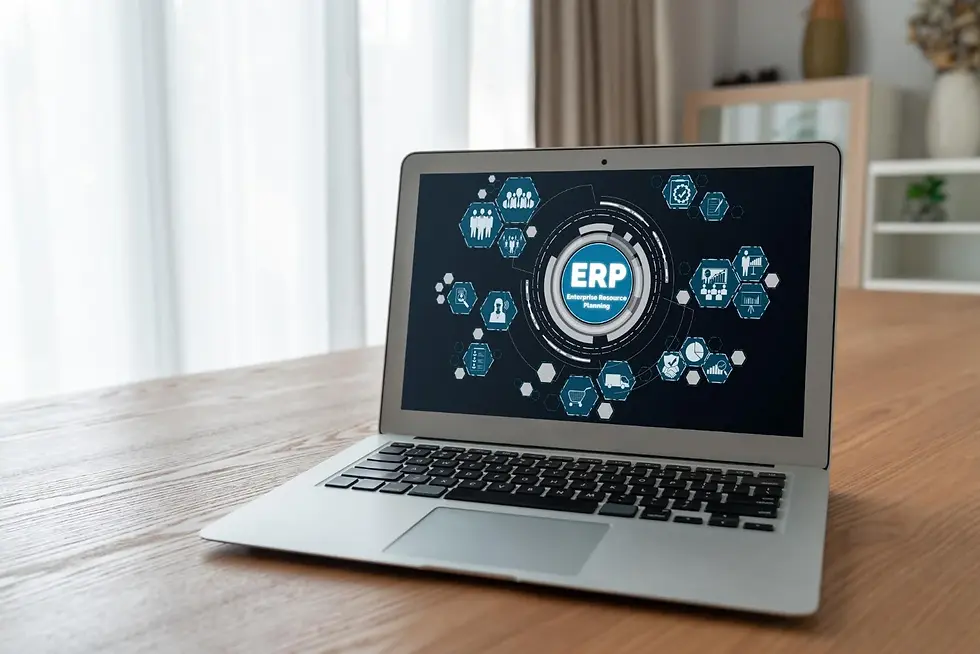
ERP Platforms
Modular ERP‑style SaaS solutions covering finance, operations, inventory, and procurement for multi‑location businesses.

HRMS SaaS Solutions
HR and payroll applications with employee self‑service, attendance, leave, and performance modules.

Fleet Management Apps
SaaS tools for tracking vehicles, routes, service schedules, and fuel usage with live location data.

Project Management Apps
Task and project tools that manage workloads, timelines, documents, and collaboration across teams.

eLearning SaaS Platforms
Online learning platforms that handle courses, tests, live sessions, and learner analytics.
Healthcare Applications
Secure healthcare SaaS solutions for clinics, hospitals, telehealth providers, or wellness services, designed with privacy and compliance in mind.

Travel Apps
Cloud platforms for agencies and tour operators with package management, booking flows, vouchers, and customer dashboards.

Ecommerce and Retail Apps
SaaS products for catalogues, orders, payments, fulfilment, and multi‑store retail operations.



Clear Your Doubts
FAQs
SaaS development services cover planning, designing, building, testing, deploying, and maintaining cloud‑based software that users access through a browser or mobile app. They usually include architecture design, multi‑tenant setup, integrations, security, and ongoing improvements.
Outsourcing gives you access to a ready team with past SaaS experience, so you move faster without hiring a full in‑house product and engineering team. It also helps control costs, reduces technical risk, and lets you focus on product vision, sales, and customer success.
Timelines depend on product scope, complexity, and integrations. A focused MVP can often be built in a few months, while a feature‑rich SaaS platform with multiple user roles and modules usually needs a longer, phased roadmap.
Most SaaS products are hosted on leading cloud platforms such as AWS, Microsoft Azure, or Google Cloud. The final choice depends on your budget, compliance needs, preferred services, and any existing infrastructure you want to align with.
Yes, integration is a core part of SaaS application development. Platforms can connect with CRMs, ERPs, payment gateways, marketing tools, communication APIs, analytics services, and many other third‑party systems using APIs and webhooks.
Yes, post‑launch support is essential for SaaS products. This typically includes monitoring, bug fixes, security updates, performance tuning, minor feature enhancements, and help with new releases or environment changes.
Yes, existing desktop or on‑premise applications can be modernised and redesigned as SaaS products. This may involve reworking architecture, improving UX, adding multi‑tenant capability, and moving hosting to the cloud.
Yes, a complete SaaS product can be built from scratch starting with idea validation, requirement gathering, UI/UX, architecture, development, testing, and deployment. The process also covers setting up environments, monitoring, and a plan for future versions.
For most growing businesses, SaaS is more flexible because it is easier to scale, easier to access remotely, and simpler to keep updated. On‑premise software can suit cases with very strict data control or offline requirements but usually needs more internal IT effort.
Look at their experience with SaaS products, understanding of multi‑tenant architecture, security practices, and integration skills. Also review their delivery process, communication style, example projects, and how they handle long‑term support and product evolution.
Yes, SaaS products are ideal for distributed teams. Users can access the application via mobile‑friendly web interfaces or dedicated mobile apps, as long as they have an internet connection and the right access permissions.
SaaS software is hosted in the cloud and accessed over the internet, usually on a subscription basis, with updates managed centrally by the provider. Traditional software is installed on local machines or servers, often requires manual upgrades, and usually needs more internal IT management.